When he relocated to Whanganui in early 2023, Sarjeant Gallery Director Andrew Clifford had been a long-term proponent of the Auckland arts scene, but this did not stop him easily settling into a new role and a new lifestyle. He was already aware of the city’s established creative community and recognised Whanganui as a go-to destination for artists.
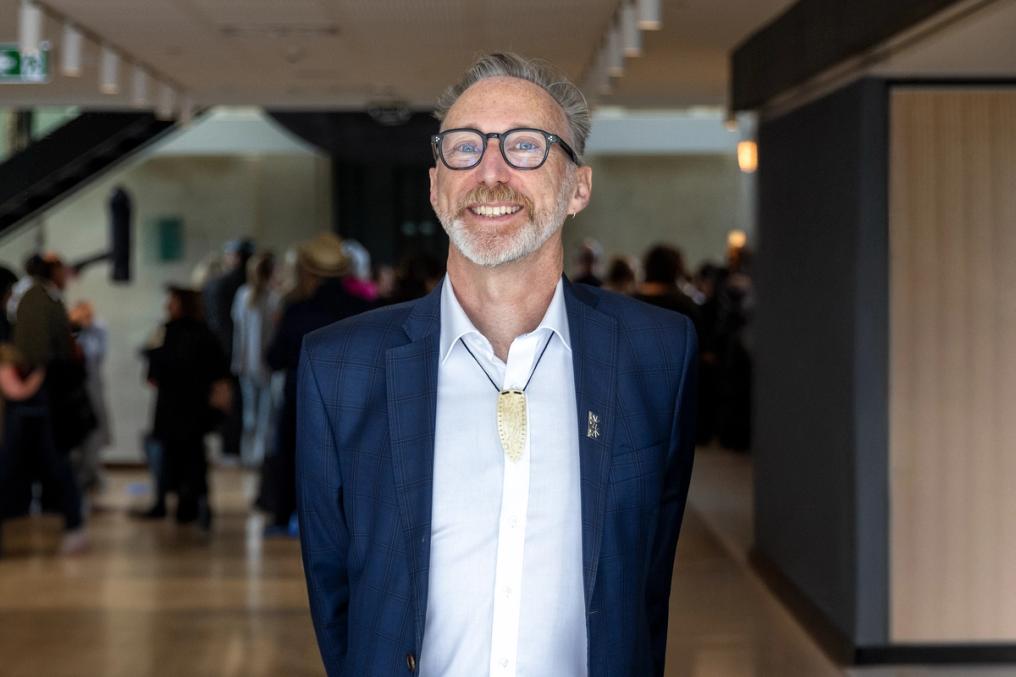
When he first arrived, his priority was to lead the gallery through the completion of a $79m redevelopment project, relaunch and embed the Sarjeant Gallery as an ongoing, evolving blend of arts, culture, and place.
The original Sarjeant Gallery first opened in 1919, strategically placed at the heart of a region that was a major site for trade and traffic along the Whanganui River. Its grandiosity reflected the vision at the time of a fast-growing city, viewed as the future capital of Aotearoa, with a need for substantial cultural infrastructure to support this image.
Described by Andrew as “one of the most beautiful gallery buildings in Aotearoa”, its establishment was the result of an extraordinary bequest of £30,000 from the estate of Henry Sarjeant, a local farmer and businessman, with instructions to build and furnish an art gallery “as a means of inspiration for ourselves and those who come after us”. This founding gift continues to contribute to the gallery’s acquisition fund to this day, helping to create a nationally significant art collection of more than 8000 works.
Planning for the redevelopment project was initiated in the 1990s by then Gallery Director Bill Milbank, whose growing relationship with local iwi also motivated a new identity for the gallery – Te Whare o Rehua, meaning the house of inspiration, guided by the celestial star Rehua. However, it was not until 2011, with growing concern about the potential earthquake risk posed by the building, that the aspirations for Te Whare o Rehua Sarjeant Gallery gathered momentum.
Philanthropy and community spirit were key in the redevelopment project, ensuring the gallery would continue to provide inspiration for future generations. Over more than a decade, a comprehensive fundraising campaign attracted benefactors from local, national, and international communities. During this time, the gallery functioned from a temporary location called Sarjeant on the Quay, which also housed the permanent collection. In 2019, an iwi-led co-design process was initiated.
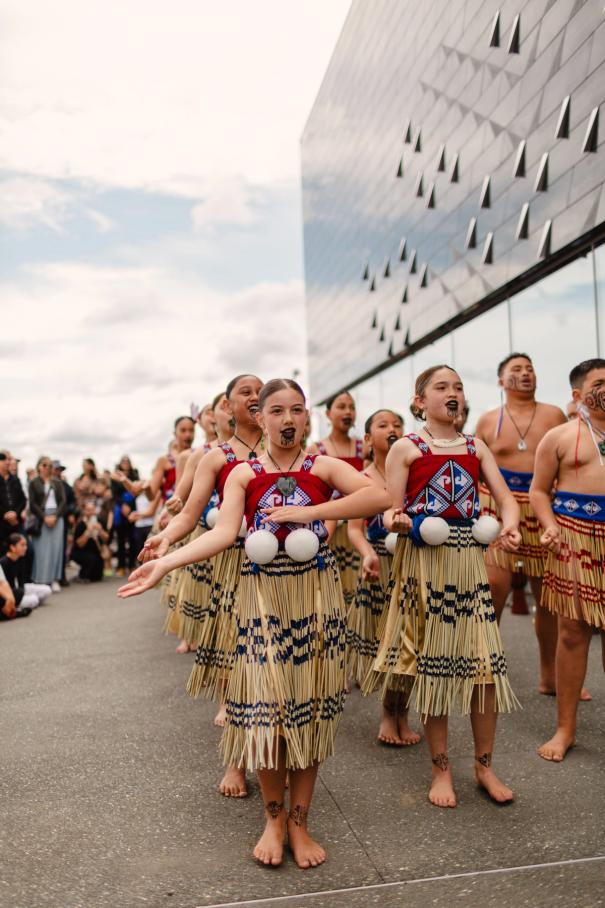
The completed Te Whare o Rehua Sarjeant Gallery, which opened in November 2024, incorporates a pair of architecturally distinct yet deeply connected buildings, bringing together the restored heritage building alongside a stunning new wing, named Te Pātaka o Tā Te Atawhai Archie John Taiaroa, honouring the legacy and commitment to collective action of its namesake. Andrew explains the glittering new gallery’s bicultural design is reflective of an evolving city that values iwi heritage and partnerships. The expanded gallery now functions as a social and cultural hub, complete with event spaces, a café, retail and education facilities, as well as purpose-built storage for its vast collection.
In its first year since reopening, Te Whare o Rehua Sarjeant Gallery exceeded projected expectations and has received more than 131,000 visitors, including 60% from outside the region. It won a suite of major awards for the gallery’s design and generates an estimated $16.7 million per year in economic impact.
Its success places Whanganui firmly within the rapidly expanding global cultural tourism sector, demonstrating the enduring power of visionary design, community investment, and philanthropic foundations.
For Andrew, having arrived at a crucial time in the project’s trajectory, with 20 months before its official opening, the launch cements his place in the ongoing Whanganui story, as he ensures the new gallery once again plays a major role in the vibrancy of the city.
Discover more about the Te Whare o Rehua Sarjeant Gallery: sarjeant.org.nz