What is design thinking?
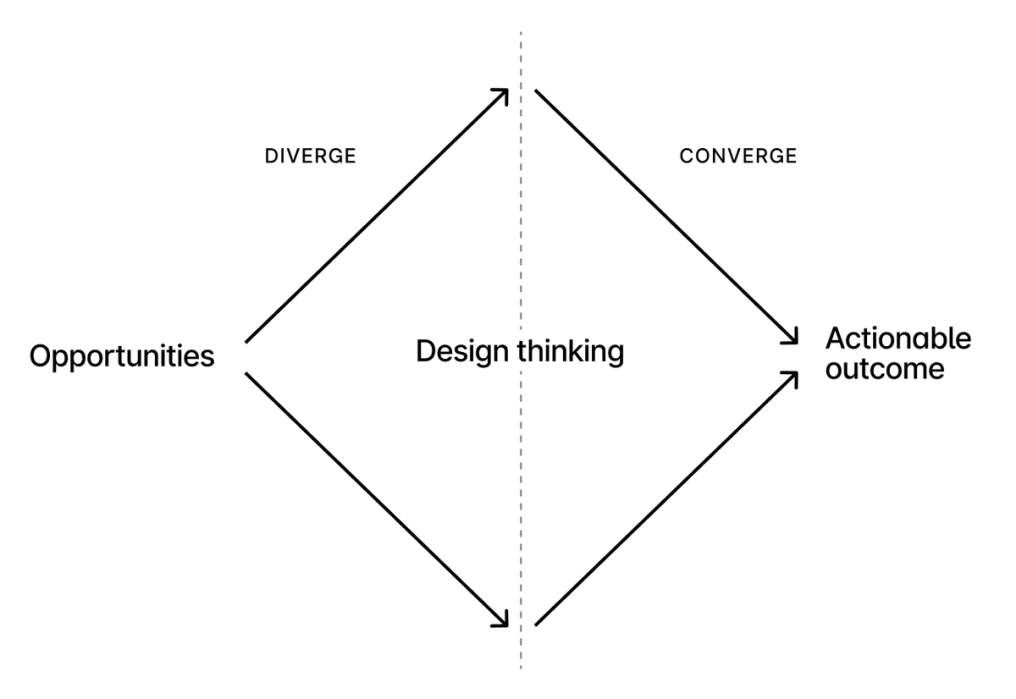
Design thinking is a human‑centred, iterative approach that starts with understanding people; their needs, constraints, aspirations and lived realities. Rather than jumping straight to solutions, it uses structured curiosity: empathising with stakeholders, defining real problems, ideating broadly, and testing ideas through small, low‑risk prototypes.
This method blends creativity, data, local insight and cultural context to shape how opportunities emerge. By grounding economic decisions in real user experience, design thinking ensures we solve the right problems, not just the obvious ones.
In economic development, design thinking is essential because it reduces risk and increases impact. It helps regions like Whanganui move beyond traditional, top‑down planning toward approaches that are responsive, evidence‑based and future‑focused.
When we co‑design with businesses, iwi and hapū, founders, educators and community partners, we unlock insights that lead to more investable propositions and stronger long‑term outcomes.
Why design thinking in Whanganui
Whanganui is New Zealand’s only UNESCO City of Design, a designation awarded in 2021 that celebrates not only exceptional creativity and innovative spirit, but also the city's cultural integrity and the strength of its artistic tradition.
Design is also evident in the preservation and restoration of heritage buildings, in how manufacturers respond to diverse end-users rather than single-form functionality, and the weaving of Tupua te Kawa into city governance; the values enshrined in Te Awa Tupua legislation, which granted the Whanganui River legal personhood in 2017.
Together, these speak to solutions shaped by people, place and purpose, where a way of thinking underpins a way of approaching opportunities.
When you solve problems this way, you build things that actually last and make a real difference.